


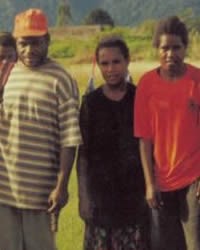

The Dedua people live in the mountainous Huon Peninsula region of Morobe Province in Papua New Guinea. Their homeland lies among steep forested ridges and deep valleys, where villages have long been established along traditional footpaths connecting neighboring communities. The Dedua speak a Papuan language belonging to the Finisterre–Huon branch of the Trans–New Guinea family, with dialects such as Dzeigoc and Fanic represented across the region. Generations of Dedua families have shaped their cultural identity within this rugged environment, maintaining ties to the land and to long-standing patterns of community life.
Life among the Dedua people typically centers on gardening, hunting, and gathering in the forested highlands. Families grow staple foods in terraced or hillside gardens, while forest paths provide access to hunting grounds and sago stands. The terrain requires extensive walking, making foot travel the primary means of connecting villages.
Community life is anchored in cooperation between extended families, with shared responsibilities for gardening, building homes, hosting guests, and participating in community events. While some Dedua individuals engage with schools or markets in nearby areas, daily rhythms continue to reflect traditional highland patterns shaped by the land and seasonal cycles.
Christianity is the primary religious identity among the Dedua people, and local churches play a significant role in worship, teaching, and community gatherings.
In earlier times, local belief systems often included respect for spiritual forces associated with the mountains, forests, and ancestral traditions. These systems varied among villages and are best described simply and with caution. Today, Christian teachings shape much of the moral and spiritual life of Dedua families, providing guidance for daily living and community relationships.
The Dedua people may experience challenges common to remote highland communities, including limited access to healthcare, schooling, and transportation. Support for literacy, sustainable agriculture, and community development can contribute to long-term well-being.
Spiritually, continued engagement with scripture, leadership development, and discipleship opportunities can help strengthen local churches. Encouraging strong families and fostering unity within the community can further support long-term growth.
Pray for spiritual maturity among Dedua believers and for deepening engagement with God's word.
Pray for families to be strengthened in Christ and for homes marked by unity, grace, and faithfulness.
Pray for church leaders to joyfully send their best congregants to take Christ to Buddhist and Muslim communities.
Pray that young people will embrace the hope of the gospel and grow in boldness to serve others.
Pray that the witness of the Dedua church will bring lasting transformation across their communities.
Scripture Prayers for the Dedua in Papua New Guinea.
| Profile Source: Joshua Project |


